Chromatin Immunoprecipitation Assay, ChIP
The chromatin immunoprecipitation (ChIP) technique is a powerful technique for detecting protein-DNA interactions in the natural chromatin background of cells. This method can be used to detect the binding level of specific transcription factors to a promoter element in the genome, as well as to detect the level of specific histone modifications at loci across the entire genome. Chromatin immunoprecipitation is a revolutionary tool for understanding chromosomes, allowing researchers to understand the spatiotemporal dynamic interactions between chromatin and its associated regulatory factors.
In addition to histones and transcription factors, ChIP technology can also be used to analyze the binding of transcription cofactors, DNA replication factors, and DNA repair proteins to specific regions of DNA. When conducting ChIP experiments, after obtaining specific enriched genomic target DNA fragments, standard PCR experiments, quantitative real-time PCR experiments, or NGS second-generation sequencing can be performed downstream. Among them, ChIP qPCR and ChIP sequence are particularly powerful and commonly used.
Applications
-
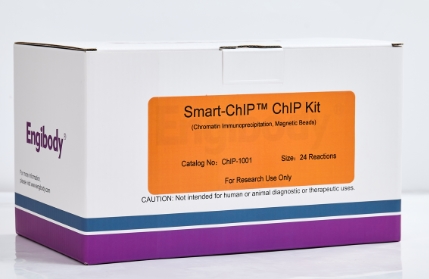
This reagent kit is suitable for adherent cells, suspended cells, animal tissues, and plant tissues. It has targeted and detailed steps to process these sample types, making it a true multi in one Kit.
-
This kit contains all reagents for transcription factor class Cross linked ChIP (Ultrasound, Protein DNA Weak Binding) that require cross-linking treatment.
-
This kit also includes all reagents for histone modified Native ChIP (MNase digestion, protein DNA strong binding) that do not require cross-linking treatment.
-
This kit contains complete experimental procedures and data analysis plans for three downstream experiments of ChIP (PCR, qPCR, and NGS second-generation sequencing), and also includes all fluorescence quantitative PCR reagents in this ChIP Kit.
-
This manual is a comprehensive technical manual for ChIP experiments, which thoroughly analyzes the key and difficult points in ChIP experiments, and provides targeted solutions to various key and difficult problems. It also includes the basic knowledge and context of epigenetics, summarizing detailed information on various types of histone modifications. After reading this nanny level manual, all difficulties will be easily solved, and ChIP is within your grasp.